Dental Bridges
Dental Bridge in Terre Haute, IN
Midtown Dentistry is committed to providing our patients with the safest, most effective, and the most natural-looking restorative and cosmetic dentistry options. We may recommend that you consider a dental bridge if you have one or more missing teeth in a row. Call now to schedule a consultation to learn more about getting a dental bridge in Terre Haute, IN.
How Dental Bridges Work
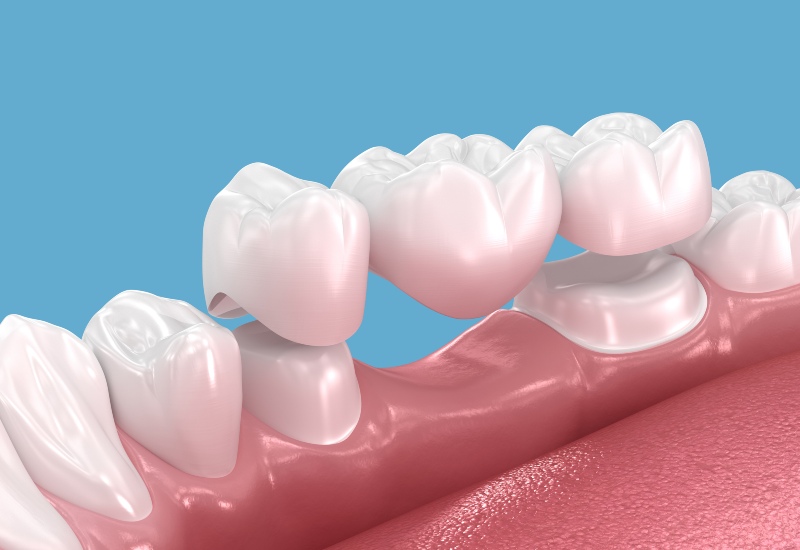
First, we will create abutments from your teeth where we will attach the bridge. We then recontour those teeth so that we have a base for the bridge. After we build these abutments, we create a mold of this part of your mouth and send it to the lab. In the lab, we use the mold to make sure that the bridge will fit properly in your mouth because we want it to feel comfortable and match your natural teeth. On both sides of the bridge, we will place dental crowns on top of the abutments, and fit a pontic (your new tooth) in the middle to replace your missing tooth.
While the lab is working on your permanent bridge, we will place a temporary bridge in your mouth. This temporary bridge will help protect the exposed gums and protect the abutments while also covering the spot of your missing tooth. Once the permanent bridge is built, we will place it in your mouth and use adhesive to set it.
Why You May Need a Dental Bridge
If you feel self-conscious about your appearance because you have missing teeth, we can help. We offer a range of restorative dentistry solutions that can restore the beauty, function, and health of your smile. We may consider a dental bridge to:
- Replace one or more missing teeth in a row
- Prevent remaining natural teeth from shifting into gaps left behind by missing teeth
- Help you avoid complications associated with missing teeth, like jawbone loss and facial sagging or deformity
- Restore chewing and speaking functions
- Improve your confidence and self-esteem
Exploring Different Types of Dental Bridges
Before we recommend a bridge, we will conduct a dental examination, take digital dental x-rays and impressions, and discuss your health history. We can then determine if you are a good candidate for a dental bridge, and help you decide which type is right for you:
- Traditional Dental Bridge – This is the most common type of bridge. We attach dental crowns to the natural teeth on each side of the gap created by your missing teeth. We then use the crowns to anchor the prosthetic teeth in place.
- Cantilever Bridge – This type is used if you only have one natural tooth next to a missing tooth. It consists of a dental crown that is placed on the natural tooth. The bridge is anchored in place by the crown on just one side. It is only recommended for front teeth, as it doesn’t offer enough structural or functional support for high bite pressure.
- Maryland Bridge – This bridge is attached to the back of neighboring teeth using metal wings and dental bonding. It may be recommended if you are missing one or more front teeth.
- Temporary or Removable Dental Bridge – A removable or temporary dental bridge is a non-permanent device used to protect your teeth and restore your smile while you are waiting for a permanent bridge.
Understanding What to Expect from the Dental Bridge Procedure
Before your bridge dental procedure, we will take a 3D scan and digital dental impressions. A lab will create a custom bridge that matches your natural teeth and fits comfortably in place. While we wait for your permanent bridge, we will prepare your natural teeth and place a temporary bridge. When your permanent bridge is ready, we will cement the permanent bridge in place. We’ll then give you tips for aftercare and maintenance and schedule a follow-up appointment.
The Benefits of Dental Bridges
A dental bridge replaces missing teeth, improves your smile and confidence, and restores chewing and speech functions. It can prevent complications like facial sagging and jawbone loss and enhance oral and overall health.
Care, Maintenance, & Longevity
To care for your dental bridge, brush twice per day with fluoride toothpaste and soft toothbrush and floss daily. Avoid chewing hard or sticky foods or non-food items like pens. Visit us every six months for a dental exam and teeth cleaning and schedule an emergency appointment if you notice damage to your bridge.
Why Choose Midtown Dentistry
Midtown Dentistry offers comprehensive, high-quality, and personalized dental care to patients of all ages. Our skilled, compassionate dental professionals provide both routine and general dentistry services as well as specialized treatment, preventive care, and restorative and cosmetic dentistry. Our goals are to improve the health of your teeth and gums and maintain the beauty of your smile.
Call Now to Schedule a Consultation for Dental Restoration
If you need to have one or more teeth extracted or are missing teeth, it’s important to schedule dental restoration to avoid complications. Our team can help you understand your teeth replacement options so that you can make an informed decision. Contact us today or book an appointment online for a dental bridge in Terre Haute, IN.
Answers to FAQs About Dental Bridge Treatment
What is a dental bridge?
A dental bridge consists of prosthetic replacement teeth that are anchored in place via dental crowns or metal wings. It is used to offer a long-term solution for missing teeth.
How long does a dental bridge last?
A bridge can last up to 15 years with consistent oral hygiene, regular dental care, and proper maintenance.
What are the differences between dental crowns and bridges?
A dental crown is a custom-made cap that fits over a natural tooth to strengthen, repair, and protect it. Crowns are also used to anchor dental bridges in place.